« back
04.29.26 | Arts & Culture

International Jazz Day: Improvisation, Connection, and the Art of Vibrant Living

Every year on April 30, International Jazz Day invites the world to celebrate a musical form that has long stood for creativity, resilience, freedom, and connection. UNESCO proclaimed the day in 2011, recognizing jazz not only as an art form, but as a force for peace, dialogue, and mutual understanding across cultures. In 2026, the global celebration takes on special resonance in Chicago, which has been named the host city for the International Jazz Day All-Star Global Concert at the Lyric Opera of Chicago.

At Sage Collective®, International Jazz Day feels especially meaningful. Jazz is a living expression of many values that shape vibrant aging: curiosity, adaptability, collaboration, self-expression, and the confidence to keep discovering something new. Jazz reminds us that mastery and improvisation can coexist. It shows us that structure matters, but so does freedom. And perhaps most importantly, it demonstrates that every voice has a place in the larger composition.

There is something deeply affirming about that idea as we age. Later life is often described in overly fixed terms, as if growth belongs only to the young. Jazz offers another model. In jazz, experience matters. Listening matters. Timing matters. What you have lived through changes what you hear and what you play. The beauty is not in perfection, but in interpretation. A standard played at seventy does not mean the same thing it did at twenty. It carries more memory, more nuance, more feeling. That is not decline. That is depth.

Jazz also speaks to the value of improvisation in everyday life. Aging, like jazz, asks us to remain responsive. Plans change. Circumstances shift. We learn to adjust tempo, find new rhythms, and stay open to surprise. That kind of flexibility is not always easy, but it can be deeply life-giving. Jazz teaches us that improvisation is not chaos. It is presence. It is paying close attention to what is happening now and answering it with creativity.

That is a powerful lesson for older adults, and for all of us.

International Jazz Day was created in part to highlight jazz as an educational tool and as a way to bring people and communities together. UNESCO describes jazz as a universal language that crosses borders and fosters dialogue. That spirit of connection aligns beautifully with Sage Collective®’s commitment to meaningful engagement, lifelong learning, and the rich exchange of ideas across generations.

Jazz is also communal by nature. Even in a solo, someone is listening. Someone is supporting. Someone is preparing to respond. The music depends on relationship. For older adults, that offers a powerful reminder that creative life does not happen in isolation. Whether we are listening to a recording, attending a local performance, sharing favorite songs with friends, or learning more about the history of jazz, we are participating in a cultural conversation that is both personal and collective. And there is joy in that participation.

This International Jazz Day, Sage Collective® celebrates jazz not only for its sound, but for what it represents: lifelong creativity, cultural memory, emotional vitality, and the courage to keep improvising. Jazz tells us that expression can deepen with age. It tells us that listening is as important as speaking. It tells us that individuality and community are not opposites, but partners.

To live vibrantly is not to follow a rigid score. It is to stay awake to possibility, to remain in dialogue with the world around us, and to trust that our voice still belongs in the music. On April 30, that is something worth celebrating.


› Back to top
« back
04.22.26 | Spirituality & Religion

Why Feeling Needed Matters More Than Ever as We Age

Healthy aging is often framed in practical terms: eat well, stay active, get enough sleep, keep your mind sharp. Those habits matter. But a growing body of research suggests that something less tangible may be just as important: the way we think about aging, our sense of purpose, and whether we feel that we still matter in the lives of others. Recent reporting in The New York Times highlighted evidence linking optimism, purpose, and volunteering with better health and longevity outcomes in later life.

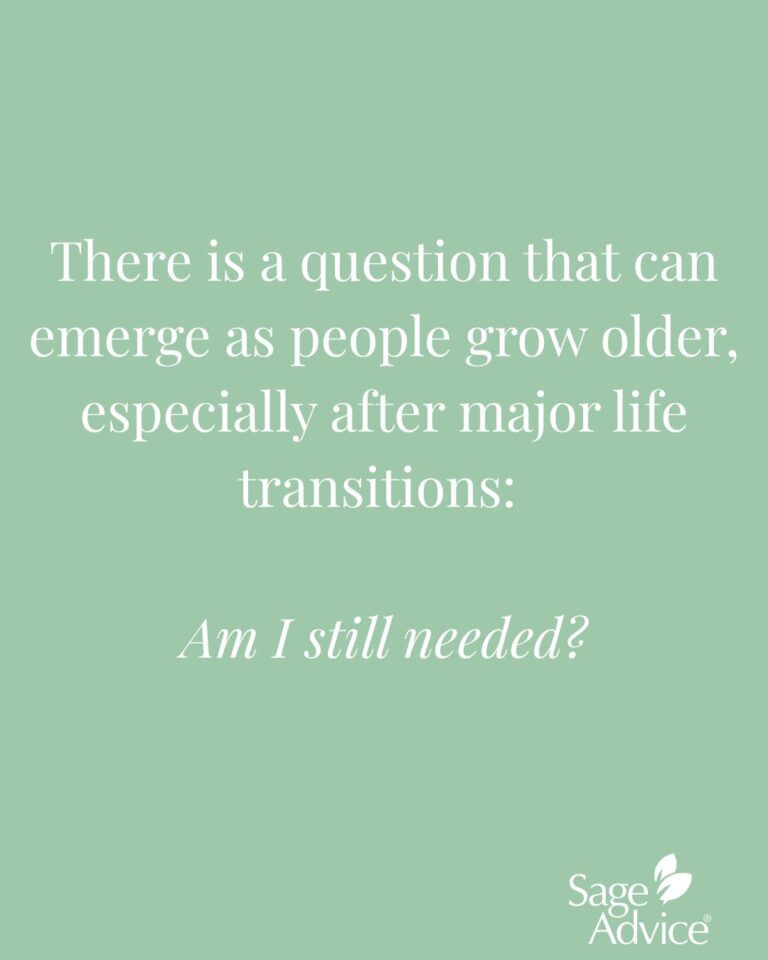
There is a quiet question that can emerge as people grow older, especially after major life transitions like retirement, relocation, or the loss of familiar routines: Am I still needed?

It is a tender question, but also a profoundly important one. Because to feel needed is to feel connected to life beyond ourselves. It is to know that our presence carries weight, that our wisdom has value, and that our contribution — whether large or small — still matters. At Sage Collective®, we believe this feeling is not peripheral to vibrant living. It is central to it.

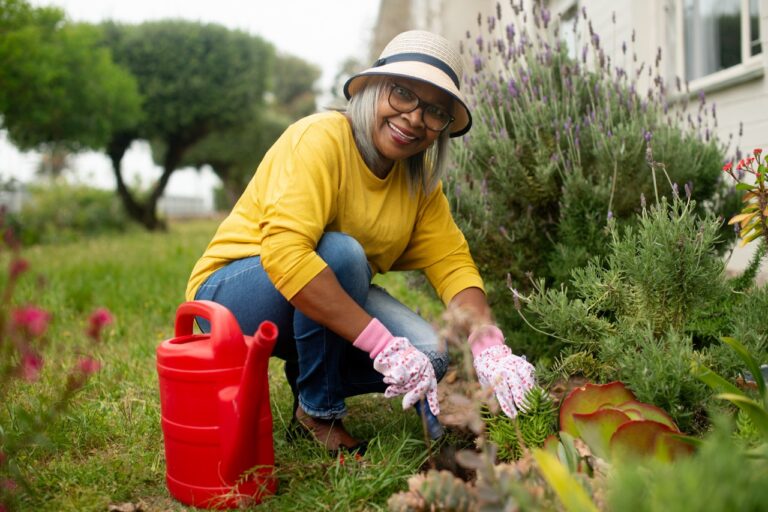
Purpose in later life doesn’t require launching a new career, writing a memoir, or becoming busier than ever. More often, it reveals itself in smaller, steadier ways: mentoring someone younger, checking in on a neighbor, tending a garden, joining a choir, volunteering in the community, helping a grandchild with homework, showing up for a friend. These acts may seem ordinary, but they create the threads that keep us tied to meaning. And meaning has power.

When we feel connected to something larger than ourselves, we are often more motivated to care for our bodies, protect our peace, and remain engaged with the world around us. Purpose can help create structure. It can give shape to the day. It can remind us that we’re still growing, still contributing, still part of the larger human story. Research on volunteering in older adulthood has linked it with better well-being and a range of healthier outcomes, reinforcing what many people know intuitively: contribution nourishes the contributor, too, and is just as important as mindset.

How we speak to ourselves about aging matters. If aging is seen only as decline, loss, or narrowing possibility, it becomes harder to imagine a future filled with joy, relevance, and discovery. But when aging is understood as an ongoing season of becoming — one that still holds room for curiosity, creativity, and connection — we create space for a different experience altogether. Research highlighted this spring found that positive views of aging were associated with better physical and cognitive trajectories over time.

We’re not advocating to deny life’s challenges or pretend that optimism erases difficulty. Rather, we recognize that our need to belong, to contribute, and to be seen doesn’t fade with age. In many ways, it becomes even more essential. At Sage Collective®, we celebrate aging as a dynamic, creative, deeply human stage of life. — not a closing chapter. To age well is to remain in relationship with possibility, and to keep finding ways to offer what only you can offer.


› Back to top
« back
04.01.26 | Arts & Culture

The Life You Want Isn’t Behind You

A new book by British psychoanalyst Adam Phillips, The Life You Want, arrived March 31, 2026, from Farrar, Straus and Giroux. In it, Phillips explores a deceptively simple set of questions: Where do our ideas about the lives we want come from? Why is it often so hard to claim them? And what happens when we stop merely enduring life and begin taking our own desires seriously?

At Sage Collective®, those questions feel especially resonant. We observe over and over that one of the great misunderstandings about aging is that the person you are should already be settled and complete. That by later life, ambitions should recede and experimentation should narrow. But lived experience tells a different story.

Later life often brings clearer longing, not less longing. It also brings a more honest relationship to possibility and becoming, offering up the chance to ask: What do I want now? What feels alive to me now? What kind of life am I still shaping?

Phillips’s work offers a powerful corrective to the idea that growth belongs only to the young. His argument is that many of us are preoccupied with having lives we genuinely want and enjoy, rather than lives we merely tolerate, but that this becomes more difficult in cultures that constantly sell enjoyment while often making real fulfillment harder to access.

This insight lands with particular force in American society, which tends to flatten older adulthood into maintenance, decline, or retrospection.

Sage Collective® has long offered another vision: later life can be a period of creativity, contribution, discovery, and renewed self-definition. Not because aging is easy or uncomplicated, but because it can free us from certain performances and bring us closer to what matters.

The Difference Between the Life You’re Given and the Life You Choose
One of Phillips’s recurring concerns is the tension between the life we say we want and the life we may actually want underneath habit, expectation, or cultural scripting. In a 2024 essay that anticipates themes of the new book, he writes that “the life you want” may be partly hidden from you, shaped by unconscious desire and by the values your culture has handed you.

That idea feels especially meaningful for older adults, many of whom have spent decades fulfilling roles with devotion and integrity: raising families, building careers, caregiving, providing stability, doing what was necessary rather than what was always most wanted.

Then, at some point, a new question arrives: Now that I am no longer defined entirely by obligation, what is calling me?

For some, the answer is creative. Painting. Writing. music. Gardening. Dance. For others, it is intellectual: finally studying a subject long deferred, joining a discussion group, returning to language learning, engaging in civic life. For still others, it is relational or spiritual: deepening friendships, mentoring younger generations, volunteering, reconnecting to joy.

These are expressions of selfhood, and they remind us that the life you want isn’t necessarily a dramatic reinvention. Sometimes it is a subtle but profound realignment that embraces more honesty and room for delight.

Wanting Is Not a Problem to Solve
One of the most compelling ideas in Phillips’s new book is the notion that wanting itself shouldn’t always be treated as a problem to eliminate. Rather, it is a condition of being alive, something that keeps life open and unfinished. This is a beautiful idea for any stage of life, but especially in later life. Too often, older adults are expected to be realistic in ways that are really a demand to become smaller, and to settle into what is. But vibrant living requires something else. It asks us to stay in relationship with curiosity, protecting the part of ourselves that still leans toward experience, meaning, surprise, connection, beauty, challenge, and growth.

At Sage Collective®, we might call this an ethic of aliveness. Not chasing novelty for its own sake or denying loss. But remaining open to the unfinishedness of being human. We think there is dignity and wisdom in that openness.

Beyond Self-Improvement
Phillips hasn’t written a conventional self-help book. Reviewers note that The Life You Want avoids easy formulas and prescriptive advice in favor of focusing on the complexity of inner life, contradiction, and desire. Older adults don’t need lectures on how to optimize every hour, improve every habit, or turn every year into a productivity project. What many people need instead is permission to reflect, to revise, to listen inwardly, to question inherited scripts, and to imagine a future that still belongs to them.

The Wisdom of Unfinishedness
There is a subtle pressure in our culture to arrive at a final version of ourselves. To become fixed, explained, complete. But human beings aren’t finished projects. Phillips’s work often pushes against rigid prescriptions, and one recent review of the book describes his sensibility as anti-authoritarian, skeptical of premature conclusions, and interested in conversation over dogma. At Sage Collective®, that feels profoundly aligned with the spirit of lifelong learning. To grow older wisely is to become more spacious in questions, not to have all the answers. And perhaps that is one of the gifts of later life: greater freedom to live the questions with intention.

A More Expansive View of Aging
If Phillips’s thesis suggests that many of us are still trying to discern the life we truly want, Sage Collective® would add this: there is no age limit on that discovery.

The life you want may not look like the one you imagined at 30 or 50. It may be quieter, richer, stranger, more communal, more creative, more local, more spacious, more purpose-filled. It may involve service. It may involve art. It may involve rest. It may involve beginning again. What matters is whether your life feels inhabited by you, not one that mirrors someone else’s template of success.

That is part of the wisdom older adults carry: the growing ability to distinguish what is culturally prescribed from what is personally meaningful. To know that fulfillment lives in engagement, in curiosity, in relationships, in contribution, in joy, and in the ongoing courage to become more fully oneself.

In this sense, The Life You Want speaks to possibility. And for those of us committed to vibrant living, that possibility remains gloriously, necessarily unfinished.

› Back to top
« back
03.25.26 | Arts & Culture

Intergenerational Living: Connection, Cognition & Community

Across cultures and centuries, the idea of generations living and growing together wasn’t unusual — grandparents raising grandchildren, cousins playing on shared porches, aunts and uncles dropping by after school. In modern Western societies, however, aging and housing have often been treated as separate stages, siloed into retirement communities or care facilities far from younger generations.

At Sage Collective®, we are seeing a new trend emerge. As more people live longer and rates of social isolation rise, researchers and community innovators are revisiting what it means to live with other generations. And the findings suggest that intergenerational living is not just a cultural value but a neurological, psychological, and social strategy for thriving as we age.

The Benefits Go Beyond Nostalgia
Research consistently shows that older adults with meaningful intergenerational connections, whether through daily life or structured programs, experience better mental health and overall life satisfaction than those without them. Social contact with younger people reduces loneliness, boosts mood, and has been associated with improved psychological well-being.

Intergenerational programming — where older adults interact with children, teens, or young adults in shared activities — has been linked to better physical health, social inclusion, and community cohesion.

Cognitive Engagement & Communication Matters
Studies examining long-term intergenerational connections suggest that regular communication and social engagement with adult children and other younger family members can positively influence cognitive function in middle-aged and older adults. Importantly, the quality and frequency of communication seem to matter more than sheer proximity.

Shared Living as a Social and Economic Strategy
Multigenerational or intergenerational household arrangements, where older adults co-reside with adult children, grandchildren, or unrelated younger people, have become more common in recent years, partly due to economic pressures and housing costs. Beyond financial benefits like shared expenses, these living arrangements often provide emotional support, companionship, and shared daily purpose for older adults, which correlates with greater life satisfaction and lower risk of negative health outcomes tied to isolation.

Two Generations, Two Directions of Influence
The value of intergenerational living isn’t one-way. While older adults gain companionship, the younger generations benefit too:

  • Children exposed to older adults often develop more nuanced views of aging, reduced ageism, and improved empathy.
  • Grandchildren of involved grandparents may have better emotional well-being and healthier lifestyle influences throughout development.
  • Young adults living with older mentors report gains in emotional support, life skills, and even academic outcomes.

This bidirectional exchange deepens meaning for all involved and fosters communities rich in wisdom and energy.

Quality of Relationship Eclipses Mere Proximity
Research also highlights that the quality of intergenerational connection matters. Frequent contact with a single family member in a strained or conflict-laden context may not confer the same cognitive or emotional benefits as broader, balanced, and harmonious interactions with multiple relatives. This nuance suggests that intergenerational living isn’t inherently beneficial, but how these relationships are nurtured and supported are the factors that lead to an enriched quality of life.

Designing for Intergenerational Connection
Thought leaders in architecture, urban planning, and community design are now integrating intergenerational principles into housing and public space:

  • Purpose-built developments that house seniors alongside families or students.
  • Shared common spaces that encourage daily interaction across ages.
  • Community programs linking senior centers with schools, arts programs, and mentoring opportunities.

These approaches recognize that connection is a structural issue and that built environments can either reinforce isolation or promote flourishing cross-generational life.

A Future of Shared Lives
As demographics shift, with populations aging and younger generations facing economic pressures, intergenerational living offers a compelling path forward. It marries practical needs with deep human truths: belonging nourishes the brain, shared purpose enriches emotional life, and relationship is central to resilient communities.

At Sage Collective®, we’re reminded that thriving isn’t reserved for any single stage of life. It is co-created through laughter across ages, lessons exchanged, stories shared, and daily rhythms woven between generations.

› Back to top
« back
02.25.26 | Mental Wellbeing

Healthspan is the Goal. Joyspan is the Engine.

In recent times, the national conversation around aging has sharpened its focus. We’re hearing more about brain health. About mobility. About dementia prevention. About anti-inflammatory diets and strength training and sleep optimization.

The word of the moment is healthspan — the number of years we live in good health. It’s an important shift. But at Sage Collective®, we’ve been asking a parallel question for some time now:

What makes those healthy years feel worth living?

Last year, we named it joyspan — measuring life in moments, not years. And now, as longevity science evolves, something beautiful is becoming clear: Joy isn’t separate from healthspan.  Joy may be one of its strongest predictors.

The Science is Catching Up to the Spirit
Research increasingly confirms what many older African Americans already know intuitively:

  • Social connection protects cognitive function.
  • Purpose reduces risk of decline.
  • Movement boosts mood and memory.
  • Laughter lowers stress hormones.
  • Optimism correlates with longevity.

In other words, joy isn’t decorative. It’s neurological. When we speak about preventing dementia, we’re also speaking about engagement. When we speak about mobility, we’re also speaking about dignity. When we speak about nutrition, we’re also speaking about culture and memory.

Healthspan may be measured in years. Joyspan is measured in vitality. And the two are deeply intertwined.

Joy as a Brain-Healthy Practice
Consider this:

  • A walking group isn’t just fall prevention. It’s friendship.
  • A dance class isn’t just cardio. It’s expression.
  • Learning to use new technology isn’t just cognitive training. It’s confidence.
  • Cooking a traditional meal isn’t just nutrition. It’s continuity.

Joy stimulates the brain’s reward system. It encourages participation. It builds resilience against stress — one of the quiet accelerants of aging. A life that feels meaningful is a life we stay engaged in. And engagement is protective.

From Prevention to Participation
The modern longevity movement often emphasizes avoidance:  Avoid decline. Avoid disease. Avoid frailty. But what if we shifted toward participation? Participate in curiosity. In creativity. In community.

Participation builds joy. Joy builds resilience. Resilience supports healthspan. This isn’t wishful thinking. It’s behavioral science.

Joyspan as a Design Principle
If healthspan asks, How long can I remain healthy?  Joyspan asks, What makes me want to?

That question reframes everything. It moves us beyond metrics into meaning. Beyond survival into significance. Beyond prevention into presence.

At Sage Collective®, vibrant living has never been about chasing youth. It’s about expanding aliveness, so that joy becomes the infrastructure, not the icing.

A New Longevity Equation
Perhaps the future of aging is not lifespan vs. healthspan vs. joyspan. Perhaps it’s this:

Lifespan gives us time.
Healthspan gives us capacity.
Joyspan gives us reason.

And when all three align, aging becomes a deepening, not a narrowing.

› Back to top
« back
02.04.26 | Health & Wellness

Black History Month 2026: A Century of Commemoration, A Future in Bloom

This year marks a powerful milestone: A Century of Black History Commemorations. Since the inaugural celebration of Negro History Week in 1926—conceived by historian and visionary Carter G. Woodson—Black communities have carried forward a sacred tradition of honoring their past, celebrating their culture, and building toward a brighter future.

As we observe Black History Month 2026, we honor not only a century of remembrance—but also a century of resilience, resistance, joy, and boundless creativity. At Sage Collective®, we celebrate this history not as something behind us, but as something alive within us. Because for us, life doesn’t shrink with age—it expands.

100 Years of Storytelling, Healing, and Uplift
The past century has seen the world transformed by the influence of Black artists, thinkers, caregivers, and changemakers. From the Harlem Renaissance to the Civil Rights Movement, from kitchen-table organizing to tech innovation, Black history has never been static—it has always moved, evolved, and deepened.

Each February since 1926, this rich and dynamic history has been elevated, thanks to community leaders, educators, clergy, elders, and families who kept the flame alive. They gathered in schools, churches, living rooms, and libraries—not only to reflect on where we’ve been, but to pass on wisdom, pride, and possibility to new generations.

An Intergenerational Celebration
Sage Collective® believes that vibrant aging means staying connected—to others, to purpose, and to culture. That’s why Black History Month is so essential: it’s a reminder that legacy lives in conversation. Whether it’s a grandson hearing about his grandmother’s first march, or a neighbor recalling the music that shaped their youth, these stories bind us. They bring healing. They spark pride. And they ensure that Black excellence is never forgotten.

Let’s use this centennial moment to ask questions, to listen more deeply, and to amplify voices—especially those of our elders—who have lived history and made it.

Honoring Joy, Not Just Struggle
This year, as we celebrate a century of commemorations, we also celebrate a century of Black joy. Because joy has always been a radical act of resistance. It is in the rhythm of the drum, the laughter around the dinner table, the bold colors of Sunday fashion, the poetry scribbled in the margins.

While it’s important to remember injustice, it’s equally vital to remember how Black communities have thrived in spite of it. With love. With brilliance. With style. With imagination.

History in the Making
The truth is, Black history doesn’t only live in museums or archives. It’s being made right now—by the innovators, artists, caregivers, educators, and dreamers shaping our neighborhoods and our nation.

Sage Collective® stands proudly at the intersection of this legacy and this future. Through our focus on cultural arts, health equity, digital learning, and intergenerational connection, we uplift the values that have long defined Black excellence—and ensure they live on in vibrant, contemporary ways.

A Call to Remember, A Call to Expand
A century after the first formal Black History observance, we continue to honor those who came before us, while investing in those who will come next.

This month, we invite our community to:

  • Share your stories and memories with younger generations.
  • Read a novel, watch a documentary, or attend a local event that centers Black voices.
  • Support Black-owned businesses and creators.
  • Reflect on how you’re helping to build a future worthy of this legacy.

Let us mark this 100th year not only with reflection, but with commitment—to justice, to culture, to wellness, to vibrant living.

› Back to top
« back
12.11.25 | Community

Wu Jin Qi Yong: The Infinite Usefulness of a Life Well-Lived

In classical Chinese philosophy, the phrase wu jin qi yong translates loosely to “inexhaustible usefulness” or “an endless capacity to give.” It describes something whose value continually expands the more it is used—a wellspring that replenishes itself, an energy that grows through expression.

For the Sage Collective® community, this ancient idea speaks directly to the heart of vibrant living. It offers a powerful reframe for aging—less as a narrowing of possibilities and more as a deepening well of presence, wisdom, creativity, and connection.

A Philosophy of Limitless Potential
The traditional meaning of wu jin qi yong suggests that the most enduring sources of value come from within:

  • One’s inner resources
  • One’s cultivated purpose,
  • One’s lifelong capacity to learn, adapt, and contribute

These qualities do not diminish with age; often, they strengthen. Older adults accumulate experiences, insights, and practices that—when activated—create a ripple effect across families, neighborhoods, and communities.

In this way, wu jin qi yong becomes a beautiful metaphor for the Sage Collective® ethos: a life’s usefulness is never spent; it continues to unfold in ways both subtle and profound.

Endless Usefulness Through Vibrant Living
At Sage Collective®, vibrant living means embracing life’s later chapters with intention, curiosity, and joy. When paired with the lens of wu jin qi yong, vibrant living becomes a practice of continually activating one’s inner abundance.

Creativity that Expands with Use. Whether through calligraphy, painting, storytelling, music, or digital exploration, creative practice embodies wu jin qi yong. The more you use your creativity, the more you have. This is why Sage Collective® champions creative arts as essential to well-being: they replenish the spirit and spark new discoveries long after traditional “productivity” fades.

Wisdom as an Infinite Resource. Older adults hold generational knowledge—cultural, emotional, practical, and spiritual. Sharing that wisdom through conversation, mentoring, or community engagement multiplies its value. In the spirit of wu jin qi yong, every story told, every insight offered, every memory shared becomes part of a collective inheritance.

Connection That Grows Through Generosity. Relationships flourish when tended. Acts of kindness, presence, and empathy enrich both the giver and the receiver. Sage Collective®’s programs—which encourage gathering, dialogue, and shared creative pursuits—highlight the truth that connection is an inexhaustible resource. The more we offer, the more we receive.

Curiosity That Never Runs Dry. Lifelong learning—whether through technology exploration, cultural education, wellness practices, or tactile crafts—embodies wu jin qi yong by demonstrating that the mind retains its ability to expand at any age. Curiosity keeps the world large, colorful, and full of possibility.

Purpose That Evolves, But Never Ends. Purpose isn’t fixed; it adapts across a lifetime. For older adults, purpose might be found in caregiving, creative expression, advocacy, spirituality, or community involvement.

The philosophy of wu jin qi yong reminds us that purpose deepens with age.

A New Narrative for Aging
In Western culture, aging is often framed as decline or diminishment. Wu jin qi yong offers an entirely different narrative:

  • Aging is an ever-renewing source of value.
  • Aging expands a person’s capacity to give.
  • Aging reveals the boundless energy that comes from inner cultivation.

This perspective harmonizes beautifully with Sage Collective®’s mission to uplift older African Americans and foster environments where they can flourish physically, emotionally, culturally, and spiritually.

Living the “Inexhaustible Life”
To embody wu jin qi yong in daily life is to trust that:

  • The spirit replenishes itself
  • One’s gifts grow through use
  • Aging brings forth a deeper reservoir of meaning

It is to live with an open heart and a willingness to engage with the world—whether through art, learning, leadership, or simple acts of presence. For the Sage Collective® community, wu jin qi yong is an invitation to embrace a life that remains abundant, useful, and full of purpose at every age. A life that is, in every sense, vibrantly inexhaustible.

› Back to top
« back
08.14.25 | Uncategorized

Black Genius: Tre Johnson Reclaims Brilliance in the Everyday

Tre Johnson’s newly-published Black Genius: Essays on an American Legacy is a smart‑talking, deeply felt celebration of Black ingenuity that redefines genius for the Sage Collective® audience. Across 30 polished essays, Johnson dives into the daily, the personal, the unexpected—to show us a broader American excellence rooted in Black creativity, survival, resistance, and joy.

The Genius of the Everyday
Johnson opens with a central provocation: “We’re utterly amazing, yet Black folks are… left out of conversations about genius.” Rejecting the narrow focus on recognized luminaries, he instead draws attention to the brilliance embedded in everyday experiences—from his auntie’s weekend bus trips to Atlantic City to the bold designs of ’90s airbrush tees, and the razor‑sharp, profanity‑laced monologues of Dick Gregory. These essays invite readers to ask: is this not genius too?

Cultural Critique with Humor and Heart
Johnson’s writing is chatty, witty, and fiercely observant. He moves fluidly between family reminiscence, pop culture deconstructions, and historical reflection. Whether tracing his uncle’s path from Black Trenton to the University of Pennsylvania in 1977, spotlighting the Odunde festival in Philadelphia, or exploring comic‑book narratives and streetwear trends, Johnson’s voice remains grounded, urgent, and alive.

Depth and Range
What sets Black Genius apart is the thematic cohesion across distinct essays: appropriation and cultural extraction; communal structures and Black Paranoia™ (Johnson’s coined term for racialized surveillance); institutional failure versus grassroots creativity; and generational memory as inheritance and resistance. Published reviews affirm that each piece stands alone, yet the essays build a richer tapestry when read together—“astute and deeply felt,” with “thematic threads” that elevate the collection as a whole.

A Love Letter and a Call to Action
At its heart, the book serves both as a love letter to Black brilliance and a wake‑up call to readers of all backgrounds. Johnson challenges us to expand our definitions of genius beyond metrics, accolades, and dominant culture narratives. In doing so, he invites vigilance about how culture is appropriated, how language is policed, and how Black communities define their own legacies on their own terms.

About Tre Johnson
A Philadelphia native, Tre Johnson is an acclaimed essayist and cultural critic whose work has appeared in The New York Times, Washington Post Magazine, Rolling Stone, and Vanity Fair, among others. Known for his incisive explorations of race, identity, and pop culture, Johnson rose to national prominence with his viral 2020 essay, “When Black People Are in Pain, White People Just Join Book Clubs,” published in The Washington Post. His voice is both intellectually rigorous and emotionally resonant—qualities that have earned him a devoted readership. Black Genius marks his debut as a book author, and it solidifies his place as a leading voice in the contemporary conversation around cultural justice and collective memory.

Final Take for Sage Collective® Readers
Black Genius is perfect for readers seeking thoughtful cultural criticism infused with joy, wit, and ancestral wisdom. It’s a timely riposte to exclusionary narratives—rooting genius in ordinary moments and collective memory rather than mythology. While Johnson’s perspective is steeped in Black American experience, his assertions resonate across culture, race, and academic inquiry.

Some essays close with lingering questions rather than tidy conclusions—fitting for a work that asks readers to continue the conversation rather than just receive it. For those in Sage Collective®’s audience who engage teaching, civic life, or creative work, Johnson’s reframing of intelligence and brilliance offers a powerful toolset.

In short: vibrant, thought‑provoking, and unflinchingly honest, Black Genius is exactly the kind of book you will want to discuss, reference, and carry forward.

Black Genius: Essays on an American Legacy was published by Dutton in July, 2025. You can find it in local libraries, bookstores, and online.

https://www.facebook.com/DuttonPenguin/posts/chatty-yet-profound-black-genius-by-tre-johnson-subverts-expectations-from-the-v/1138186201657053/
› Back to top
« back
08.07.25 | Mental Wellbeing

Joyspan: Measuring Life in Moments, Not Years

At Sage Collective®, we believe that vibrant living isn’t measured solely by how many years we have—but by how fully we live in those years. Just as we talk about lifespan and healthspan, there’s another equally essential, if less frequently named, concept: joyspan.

Joyspan is the measure of how much joy we experience and sustain throughout our lives. It’s not about momentary happiness or fleeting pleasures. It’s about the deep, sustaining joy that comes from meaningful connections, a sense of purpose, curiosity, and the freedom to be our full selves—especially as we age.

Beyond Lifespan and Healthspan
Modern medicine and lifestyle changes have helped extend our lifespan—the number of years we live—and increasingly, our healthspan—the number of those years we live in good health. But neither of those measures captures the richness of human experience. That’s where joyspan comes in.

Joyspan is qualitative, not quantitative. It invites us to ask, Am I making space for joy in my life? What fills me up? What lifts my spirit?

 Joy Matters—Especially As We Age
We live in a world that often underestimates the emotional and creative lives of older adults. There’s a quiet but damaging narrative that says joy belongs to the young. But we know from experience—and from the beautiful lives of those in our communities—that joy can flourish at any age. In fact, many people report a renewed sense of joy in their later years, when priorities shift, distractions fall away, and we’re finally able to savor what matters most.

Joy isn’t frivolous—it’s foundational. Research shows that joy supports mental health, bolsters our immune system, and helps build resilience. It improves relationships, sharpens cognitive function, and even enhances longevity. But beyond the science, joy connects us to our humanity. It allows us to experience gratitude, wonder, and awe.

Cultivating Joyspan: Daily Practices
Unlike lifespan, which is out of our control, joyspan is something we can grow—intentionally and continuously. Here are a few practices we encourage at Sage Collective®:

  • Savor small pleasures: A cup of tea, the bloom of a flower, a warm sunbeam on your shoulder. Joy is often tucked into the ordinary.
  • Stay curious: Explore new interests, revisit old passions, take a class, or start a creative project. Curiosity opens the door to joy.
  • Connect deeply: Spend time with people who see you, love you, and make you laugh. Whether it’s family, friends, or community, joy grows in connection.
  • Practice gratitude: Take a moment each day to reflect on what brings you peace or pleasure. Gratitude enhances awareness of joy.
  • Move your body: Gentle movement, walking, dancing—these are not just physical exercises but expressions of life and aliveness.

A Joyspan Philosophy
At Sage Collective®, we are reimagining aging by prioritizing wellness, creativity, and community. Embracing joyspan means honoring the emotional dimension of wellness. It invites us to be present, to celebrate beauty in the everyday, and to believe that joy doesn’t have to fade—it can deepen.

Our joyspan is not determined by the absence of hardship, but by how often we can return to joy, even amidst challenge. As we age, joy becomes not just a possibility, but a practice. And in that practice, we find hope.

So we invite you to ask yourself—not how many years you’ve lived, or even how many healthy ones—but how much joy you’ve let in. Because joy is not the icing on life—it’s the nourishment that makes life worth living.

› Back to top
« back
06.18.25 | Community

Juneteenth 2025: Freedom to Flourish

At Sage Collective®, we believe that Juneteenth is not only a historical milestone—it is a living practice. As we prepare to honor Juneteenth 2025 on Thursday, June 19, we’re holding space for remembrance, reflection, and renewal. This year, we invite our community to consider five powerful themes that speak to the enduring legacy of this day and the vibrant futures we continue to shape.

Freedom Is a Practice, Not Just a Past
On June 19, 1865—more than two years after the Emancipation Proclamation—news of freedom finally reached the enslaved people of Galveston, Texas. But freedom did not arrive all at once, and it still hasn’t fully arrived for many. That’s why we say: freedom is not a moment; it’s a movement. It’s a practice. It lives in the choices we make every day—how we care for ourselves, how we show up in community, and how we demand dignity at every age. For older adults, practicing freedom can mean living life on your terms, unlearning limiting beliefs, or embracing joy and self-expression in bold new ways.

Inheritance of Hope: What We Carry, What We Pass Down
Juneteenth reminds us that we are the living legacy of those who dreamed before us. The stories, values, and hard-earned wisdom of older generations carry the weight of history—and the promise of healing. At Sage Collective®, we see our elders not just as keepers of memory, but as visionaries shaping the future. Whether it’s sharing family history, mentoring a young neighbor, or leading with quiet strength, every act of intergenerational connection is an act of liberation.

Joy as Liberation
Freedom doesn’t only live in laws or headlines—it lives in laughter, music, movement, and love. This Juneteenth, we celebrate Black joy as a form of resistance and resilience. For those of us who have seen decades of change, choosing joy—especially in a world that often asks us to shrink—is revolutionary. Throw on that bright outfit. Dance in your kitchen. Sing with your grandkids. Joy is not frivolous; it’s a declaration: I am here. I am whole. I deserve delight.

The Future We Deserve: Aging Boldly, Living Freely
While Juneteenth honors the past, it also challenges us to imagine a future where every person—especially older African Americans—can age with safety, creativity, and care. At Sage Collective®, that future includes access to emerging wellness tools, like virtual reality to support cognitive health. It means equitable healthcare, culturally relevant housing, and opportunities for lifelong learning. Liberation is not just about breaking chains—it’s about building a world where we are free to thrive at every stage of life.

We Are the Storytellers
Who better to preserve the spirit of Juneteenth than those who’ve lived through its echoes? Our elders are our griots—our living archives. When you share your story, you don’t just remember—you teach, you inspire, you light the path forward. Whether it’s through a Zoom call with family, a community oral history project, or a quiet conversation on the porch, we encourage you to speak your truth and honor your voice.

This Juneteenth, Let’s Celebrate the Ongoing Journey
We are not just looking back—we’re moving forward. With each story, song, protest, and prayer, we continue the work of making freedom real. At Sage Collective®, we believe that it’s never too late to live boldly, love deeply, and lead with wisdom. Juneteenth is a reminder that freedom is a flame passed from one generation to the next. May we continue to carry it forward—together.

› Back to top