« back
11.19.25 | Community

Seven Meaningful Questions to Ask the Older Adults You Love

When we ask our aging parents or loved ones how their day was, we often get a familiar answer: “Oh, fine.” But beneath that simple reply, there’s often a world of thought, emotion, and memory waiting to be invited into conversation.

At Sage Collective®, we believe vibrant living isn’t just about activity—it’s about connection. The right questions can turn everyday exchanges into moments of empathy, reflection, and joy. Inspired by therapist Amy Morin’s advice for parents seeking deeper dialogue with their children, we’ve adapted her wisdom for a different kind of relationship: the one between adult children and their aging parents.

Here are seven questions that go beyond “How was your day?”—each designed to spark meaningful conversation and strengthen emotional connection.

  1. What was the best part of your day?
    This simple question invites gratitude. When older adults reflect on moments of joy—whether it’s a morning cup of coffee, a friendly call, or a walk in the sun—it helps strengthen optimism and well-being. You might share your own, too: “The best part of my day was catching up with you.”
  2. What’s something that made you think today?
    Curiosity doesn’t fade with age—it deepens. Asking this question encourages engagement with the world, whether through a news story, a book, or a passing conversation. It reminds your loved one that their insights matter and that you value their perspective.
  3. Who made you smile today?
    This brings relationships into focus. It celebrates social connection—an essential ingredient for emotional health—and can open the door to stories about neighbors, caregivers, or longtime friends. It’s also an opportunity to notice and nurture community.
  4. What challenged you today—and how did you handle it?
    Aging can bring daily obstacles, both big and small. Asking about them with genuine curiosity (not concern) honors resilience. It shows trust in your loved one’s problem-solving and reinforces their sense of agency and self-efficacy.
  5. Who did you help—or who helped you—today?
    Giving and receiving help are both acts of connection. This question reframes independence as interdependence, highlighting the reciprocity that defines healthy relationships. It also provides insight into what support feels meaningful to your loved one.
  6. What’s something new you’d like to try?
    Encouraging experimentation—whether it’s a new recipe, a class, or a simple change in routine—helps keep the spirit of growth alive. It reminds your loved one that curiosity has no age limit and that new experiences remain within reach.
  7. What are you looking forward to tomorrow?
    Hope is a powerful motivator. This question shifts focus toward anticipation and purpose—helping older adults maintain a sense of rhythm, continuity, and excitement about the days ahead.

Small questions can make a big difference. Each one is an act of care, a signal that you’re not just checking in—you’re truly listening. And when we listen deeply, we help the people we love stay connected not only to us, but also to themselves.

› Back to top
« back
11.13.25 | Community

Plug-in to Care: Honoring National Family Caregivers Month 2025

Each November, we pause to honor the millions of family caregivers whose compassion, patience, and daily dedication sustain loved ones across generations. This year’s National Family Caregivers Month theme—“Plug-in to Care”invites all of us to connect more deeply: to one another, to resources, and to the networks that make caregiving more supported and sustainable.

At Sage Collective®, we believe that vibrant living thrives on connection. Our mission has always been to inspire older adults to live more fully—through community, creativity, and conscious care of mind, body, and spirit. The “Plug-in to Care” theme beautifully echoes those values, reminding us that no one should walk the caregiving journey alone.

The Meaning Behind “Plug-in to Care”
Caregiving today is more interconnected than ever before. The phrase “plug-in” highlights both the digital and human aspects of connection—using technology, education, and community to empower caregivers and reduce isolation. Whether that means joining a virtual support group, exploring a caregiving app, or simply reaching out for a conversation, the act of plugging in reinforces that support is available and community is near.

At its heart, this year’s theme is about recognition: seeing caregivers not only as helpers, but as vital members of our health and social ecosystems. When caregivers are equipped with tools and support, everyone benefits—from the person receiving care to the broader community around them.

Connection in Action
To “plug-in to care” means finding—and offering—connection in many forms:

  • Access tools and knowledge. Online workshops, educational videos, and caregiving platforms can offer practical skills, emotional reassurance, and inspiration.
  • Tap into networks. Community centers, local nonprofits, and organizations like Sage Collective® create spaces—both virtual and in-person—where caregivers can share stories, advice, and encouragement.
  • Seek emotional and spiritual nourishment. Caregiving can be as emotionally demanding as it is rewarding. Mindfulness, journaling, and meditation—practices we regularly explore at Sage Collective—can restore balance and resilience.
  • Celebrate the caregivers themselves. Recognition matters. Whether through a heartfelt note, shared meal, or public acknowledgment, expressing gratitude honors the humanity and strength behind caregiving.

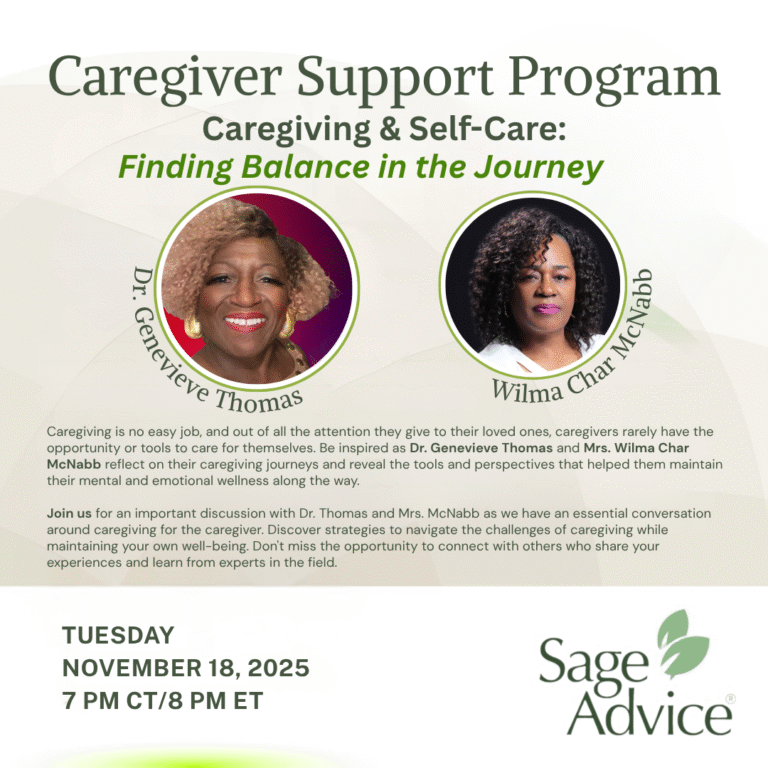
Join Us: Caregiving & Self-Care — Finding Balance in the Journey
In honor of National Family Caregivers Month, Sage Collective® is hosting a special Facebook Live event: “Caregiving & Self-Care: Finding Balance in the Journey,” on November 18, 2025, at 7:00 PM CT / 8:00 PM ET.

Caregiving is no easy job, and out of all the attention they give to their loved ones, caregivers rarely have the opportunity or tools to care for themselves. Be inspired as Dr. Genevieve Thomas and Mrs. Wilma Char McNabb reflect on their caregiving journeys and share the tools and perspectives that helped them maintain mental and emotional wellness along the way.

Together, we’ll explore how caregivers can sustain their own health while caring for others—learning strategies for managing stress, fostering resilience, and nurturing a balanced sense of self. It’s an evening of connection, understanding, and encouragement—an essential conversation around caregiving for the caregiver.

Don’t miss the opportunity to connect with others who share your experiences and learn from experts in the field. RSVP today to join us for this meaningful dialogue on reflection, balance, and well-being.

Living the Message
Family caregivers are the quiet heroes who hold our communities together. “Plug-in to Care” reminds us that support, learning, and connection are not luxuries—they’re lifelines. This month and beyond, let’s honor caregivers by extending compassion, sharing knowledge, and building community.

At Sage Collective®, we celebrate caregivers as living embodiments of vibrant living—people whose strength, grace, and generosity reflect the very best of us all.

This November, and in every season that follows, may we each find new ways to plug in—to care, and to one another.

› Back to top
« back
11.06.25 | Community

Honoring Memory, Inspiring Hope: National Alzheimer’s Disease Awareness Month 2025

Every November, we pause to recognize National Alzheimer’s Disease Awareness Month—a time dedicated to shining light on one of the most profound health challenges of our time. Established in 1983 by President Ronald Reagan, this national observance encourages understanding, compassion, and collective action for the millions of individuals and families affected by Alzheimer’s disease.

At Sage Collective®, where we champion the pursuit of vibrant living at every age, this month holds special meaning. We see awareness not just as acknowledgment, but as a call to empowerment—an opportunity to learn, connect, and nurture the wellbeing of both mind and community.

Understanding the Challenge
Today, more than six million Americans live with Alzheimer’s disease, and that number is projected to rise significantly in the coming decades. Alzheimer’s is the most common form of dementia, characterized by progressive changes in memory, thinking, and behavior that interfere with daily life. But behind the statistics are real lives—families, friends, and communities who navigate these changes with courage and care.

For many older adults, the diagnosis can bring fear or isolation. Yet, awareness opens the door to early detection, meaningful support, and a deeper sense of connection. At Sage Collective®, we believe that knowledge is care—and that understanding Alzheimer’s helps each of us respond with empathy, intention, and love.

Living Vibrantly in the Face of Memory Loss
While there is not yet a cure for Alzheimer’s, emerging research continues to highlight how lifestyle factors—nutrition, exercise, sleep, and social engagement—may help protect and strengthen brain health.

That’s why Sage Collective®’s philosophy of vibrant living is so essential:

Each of these elements isn’t just good practice—they’re acts of hope. They remind us that even in the presence of cognitive change, purpose and vitality remain within reach.

Supporting Caregivers and Community
Equally important are the caregivers—the family members, friends, and professionals who devote their days to supporting those living with Alzheimer’s. This month serves as a reminder to honor their compassion and endurance. Offering respite, sharing a meal, or simply listening are powerful ways to show gratitude and solidarity.

At Sage Collective®, we often emphasize that vibrant living is not an individual pursuit—it’s a shared one. Community care is a form of collective strength. Whether you’re volunteering, donating to research, or lending a hand to a neighbor, your participation helps sustain a culture of dignity and understanding.

A Month for Reflection and Action|
Throughout November, we encourage everyone to take part in Alzheimer’s Awareness Month by:

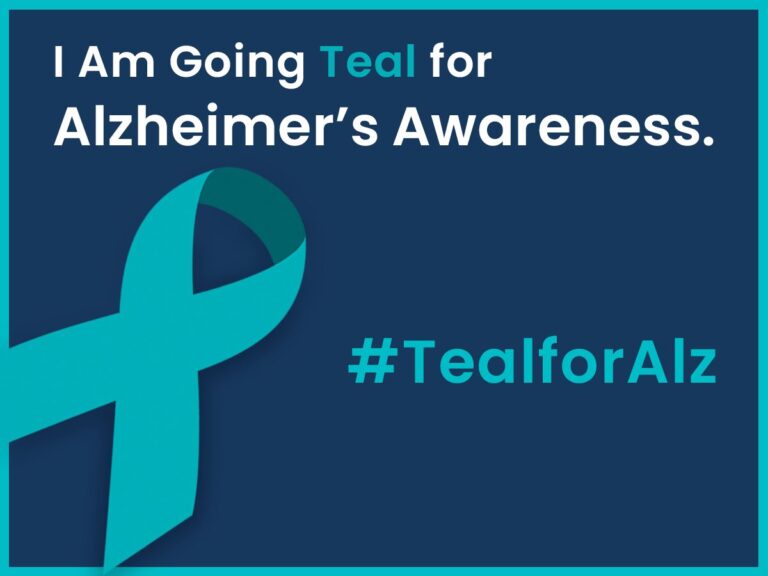
  • Wearing teal, the color of awareness and calm support.
  • Learning the early signs of Alzheimer’s to help friends and family access care sooner.
  • Sharing your story to reduce stigma and inspire others.
  • Supporting local organizations that provide resources, respite, and advocacy.

At Sage Collective®, we believe awareness is the first step toward transformation. By turning compassion into action, we build a future where aging is met not with fear, but with grace, understanding, and vibrant possibility.

Remembering the Heart of It All
Alzheimer’s disease affects memory—but it cannot erase meaning. The bonds we form, the love we give, and the communities we nurture endure far beyond the boundaries of memory.

As we observe National Alzheimer’s Disease Awareness Month, let us recommit to living with empathy, mindfulness, and purpose. In doing so, we honor not just those who remember, but all who are remembered.

› Back to top
« back
09.18.25 | Sage Advice®

Q&A with Olivia Matongo, Alzheimer’s Association® on Brain Health, Equity, and Community

Sage Collective® and the Alzheimer’s Association® share a powerful common ground: helping older adults live vibrantly with knowledge, connection, and care. Ahead of our Facebook Live conversation with Olivia Matongo, Vice President of the Alzheimer’s Association® Illinois Chapter on September 23, 2025 at 7:00PM CT, we sat down with Olivia about a number of subjects, including how to make brain-healthy living more accessible, equitable, and actionable for our community.

In your role, what does a “good day” look like—and who benefits most from your work?
My team leads community outreach and engagement—we’re the ones executing the mission in the field. That means raising awareness about the disease and about our resources, building relationships with community leaders and organizations, and making sure people who are struggling can access care and support.

How did the relationship with Sage Collective® come to be?
We met at a community meeting and started talking about ways to partner. After follow-up conversations, we landed on doing a session focused on brain health—sharing who we are, what we do, and how we can support Sage Collective®’s community.

Many people ask how to distinguish normal, age-related memory lapses from early warning signs of Alzheimer’s. How do you explain the difference?
Normal aging isn’t disruptive—you might occasionally forget something and then remember it later. Dementia involves memory loss that interferes with daily life, like getting lost on a familiar route or struggling with tasks you used to manage easily. It affects the individual and those around them as loved ones notice changes and step in with more support.

We’re hearing more about new blood tests entering the diagnostic toolkit. What should families know?
Diagnosis is never one single test—clinicians use a number of tools in the diagnostic process, including cognitive and behavioral assessments. Blood-based tools are emerging to help detect biomarkers associated with Alzheimer’s, which can make the path to answers less invasive and help families plan and prepare sooner in consultation with their clinicians.

What daily habits do you encourage for better brain health?
At the Alzheimer’s Association®, our public health team recently launched “10 Healthy Habits for Your Brain” grounded in research. Highlights include moving your body, not smoking, managing blood pressure and diabetes, getting enough sleep, keeping your brain learning new things, and following the MIND diet (leafy greens, berries, nuts, lean proteins, and less butter, cheese, and red meat). Doing several of these together can meaningfully reduce risk over time.

Sage Collective®’s “9 Ways of Vibrant Living” align closely with your recommendations.
Exactly. Engagement and purpose are powerful. When partners like Sage Collective®help us reach people with practical, everyday ways to take care of brain and body, the impact multiplies.

How is the Alzheimer’s Association® building trust and access in communities that have been underserved?
We’ve invested for years in focused DEI efforts—partnering with organizations already rooted in Black, Brown, and rural communities. In Chicago, for example, we co-create annual conferences with community planning committees—one on the South Side centered on African American communities and one on the West Side centered on Hispanic communities—so that education, resources, and support truly reflect community needs.

What does a strong partnership with Sage Collective® look like to you?
Access and trust. Being invited in to educate and support your community is huge—and it’s reciprocal. We also ask, “How can we serve Sage Collective®’s goals?” As our organizations continue talking, the partnership can evolve in ways that make sense for both missions.

Join us live
Don’t miss our Facebook Live with the Sage Collective® team and Olivia Matongo from the Alzheimer’s Association®, taking place on Tuesday, September 23rd at 7 PM CT/8 PM ET. We’ll dig deeper into early signs, new diagnostic tools, everyday prevention, and community resources. Bring your questions—and invite a friend or care partner. Go to the Sage Collective® website to reserve your spot!


› Back to top
« back
08.21.25 | Mental Wellbeing

Beyond the Headset: New Frontiers in Virtual Reality for Dementia Care

One year ago, we explored how virtual reality (VR) was beginning to enhance the lives of those living with dementia, offering calming, stimulating, and emotionally resonant experiences. Since then, the field has continued to evolve—driven by advances in immersive technology, deeper understanding of cognitive health, and the creative collaboration of technologists, therapists, and caregivers.

At Sage Collective®, we remain committed to amplifying innovative approaches that support vibrant, connected living for older adults. As extended reality tools like VR and AR continue to mature, so too does their potential to foster joy, memory, and dignity in the lives of those with dementia.

The Rise of Personalized VR Therapy
One of the most exciting developments over the past year is the emergence of personalized VR therapy—programs that adapt to a person’s life history, preferences, and needs. Developers and clinicians are increasingly incorporating biographical information into custom-built experiences. Rather than offering a one-size-fits-all beach or garden, these platforms might recreate a specific neighborhood someone grew up in, or a hometown church, drawing on family photos, regional landmarks, or even personal anecdotes.

This deeply individualized approach can evoke stronger emotional responses, help trigger dormant memories, and build a sense of self-continuity that dementia often threatens to erode.

AI + VR: Smarter Support in Real Time
Artificial intelligence is also making its way into VR dementia care. Some newer platforms now use real-time monitoring to gauge a user’s emotional or cognitive state—subtly adjusting the environment in response. If someone appears stressed or agitated, the system might shift the lighting, sound, or pace of the experience. These AI-enhanced environments act as gentle companions, offering dynamic support tailored to the individual’s mood and moment.

VR as a Social Connector
Isolation remains one of the greatest challenges facing those with dementia—and their caregivers. In response, several VR platforms are now incorporating multi-user capabilities. With just a headset and an internet connection, someone can “walk” on the beach with a distant loved one, play a virtual game with a grandchild, or sit in a familiar living room recreated for shared storytelling.

These shared virtual experiences offer more than novelty. They provide connection, presence, and a powerful antidote to loneliness.

The Emerging Role of Augmented Reality (AR)
Alongside the growth of virtual reality, augmented reality (AR) is gaining traction as a supportive tool in dementia care. Unlike VR, which immerses the user in a fully virtual environment, AR layers digital elements—images, sounds, or prompts—onto the real world through a screen or glasses.

In practice, AR can assist individuals with dementia by providing gentle, real-time cues in their environment. For example, an AR-enabled tablet might guide someone through preparing a meal by projecting visual step-by-step instructions on the countertop. Smart glasses might help identify family members by displaying names or relationship tags above faces.

These subtle interventions promote independence, confidence, and dignity i—and they do so without requiring users to leave their physical surroundings. As AR becomes more user-friendly and affordable, we expect to see it complement VR as part of a holistic, tech-supported approach to aging in place.

Training for Caregivers, Too
The evolution of VR isn’t just benefiting those living with dementia—it’s reshaping how caregivers are trained. New VR modules immerse caregivers in simulated scenarios that mimic the sensory and emotional experience of dementia. By “walking in the shoes” of someone with cognitive decline, caregivers can develop greater empathy, patience, and insight—leading to more compassionate and effective support.

Looking Ahead: Toward Holistic, Home-Based Care
As immersive technologies become more affordable and user-friendly, we’re beginning to see a shift from facility-based care to home-based options. This democratization of tools like VR and AR has the potential to empower more families to integrate them into daily life—whether as a source of relaxation, cognitive stimulation, or connection.

At Sage Collective®, we are encouraged by the creativity and care shaping the next generation of dementia-supportive technologies. As we move forward, we’ll continue to explore how innovation can deepen well-being—not by replacing human touch, but by enhancing the moments of beauty, memory, and meaning that define a life well-lived.

› Back to top
« back
04.10.25 | Personal Development

Eliminating Health Disparities, Advancing Vibrant Living: Celebrating National Minority Health Month 2025

At Sage Collective®, we are deeply committed to promoting vibrant living for older African Americans—an approach that embraces not only physical wellness but also emotional, social, and cultural wellbeing. As we honor National Minority Health Month 2025, we proudly align ourselves with this year’s theme: “Advancing Commitments to Eliminate Health Disparities.” This powerful call to action reminds us that no matter one’s age, background, or zip code, everyone deserves equitable access to quality healthcare and the opportunity to live a healthy, fulfilling life.

Why Minority Health Matters
Health disparities are differences in health outcomes and access to care that are closely linked with social, economic, and environmental disadvantages. For older African Americans, these disparities can manifest in higher rates of chronic conditions like hypertension, diabetes, and heart disease, along with barriers to preventive care and mental health services.

These disparities are not simply the result of individual choices—they are deeply rooted in systemic issues, such as unequal access to healthcare, racism in medical settings, environmental injustices, and economic inequality. These factors intersect to create significant health gaps that cannot be closed without collective, sustained commitment.

A Call to Action for Equity
The 2025 theme urges individuals, organizations, and policymakers to do more than acknowledge disparities—it challenges us to take meaningful steps toward eliminating them. At Sage Collective, we are answering that call through culturally relevant programming that uplifts and empowers older adults in underserved communities.

From our Vibrant Learning Series to the launch of our Caregiver Support Program, we aim to provide resources that equip individuals and families to make informed health decisions, advocate for themselves, and stay connected to support networks. Our work is grounded in the belief that wellness must be inclusive, accessible, and community-centered.

What You Can Do
While systemic change is necessary, individual and community actions also play a vital role in advancing health equity. Here are a few ways older African Americans—and those who support them—can take steps toward vibrant health and well-being:

  • Stay informed: Keep up with trusted sources on health topics that impact you and your community.
  • Ask questions: Don’t be afraid to advocate for yourself in medical settings. You have the right to be heard and understood.
  • Build support networks: Whether through faith-based communities, neighborhood organizations, or programs like Sage Collective’s, strong support systems contribute to better health outcomes.
  • Get involved: Support or volunteer with local initiatives aimed at improving community health and advocating for systemic change.

Moving Forward, Together
As we reflect on this year’s theme, we recognize that advancing commitments to eliminate health disparities means centering the voices and experiences of those most impacted. At Sage Collective®, we’re committed to creating a future where every older adult—regardless of race, income, or location—has the opportunity to thrive.

Let National Minority Health Month 2025 serve as both a celebration of progress and a challenge to do more. Together, we can dismantle the barriers to health equity and create lasting change—one person, one program, one community at a time.


› Back to top
« back
03.13.25 | Caregiver Support

Launching the Sage Collective® Caregiver Support Program: A Lifeline for Those Who Care

Caregiving is an act of love, resilience, and dedication—but it can also be overwhelming. Many caregivers, especially those in underserved communities, find themselves navigating immense physical, emotional, and financial challenges with little support. Recognizing this, Sage Collective® is proud to launch the Caregiver Support Program, an initiative dedicated to empowering and uplifting caregivers through education, community, and self-care.

A Program Built for Caregivers
At Sage Collective, we understand that caregiving doesn’t come with an instruction manual. From managing a loved one’s medical needs to balancing work and personal responsibilities, caregivers often carry an invisible yet significant burden. The Sage Collective Caregiver Support Program is designed to provide the resources, tools, and emotional support caregivers need to thrive—not just survive—in their roles.

This program offers:

  • Educational workshops on caregiving techniques, stress management, and self-care
  • Support groups facilitated by professionals, providing a safe space for sharing experiences and advice
  • Access to community resources like healthcare services, respite care, and financial planning
  • Online forums and virtual support to ensure accessibility for all caregivers, no matter their location or schedule
  • Advocacy efforts aimed at influencing policy changes that benefit caregivers, particularly African American caregivers who play a vital role in family and community care

Through this holistic approach, caregivers gain the tools they need to provide the best care for their loved ones while also prioritizing their own well-being.

Join Us for the Caregiver Support Program Launch Event
To celebrate this new initiative, we invite you to our official launch event on March 18, 2025, at 7:00 PM. This evening will focus on Navigating the Emotional Challenges of Caregiving—a crucial conversation that acknowledges the stress, guilt, and exhaustion many caregivers experience.

Featured Speaker: Dr. Genevieve Thomas. Dr. Thomas will lead a discussion on how to manage the emotional weight of caregiving, offering strategies for building resilience, reducing stress, and maintaining a sense of self amid caregiving responsibilities.

Guided Meditation & Yoga Session: Maile Wicklander. To help caregivers reconnect with themselves, certified yoga and meditation instructor Maile Wicklander will guide a low-impact yoga and mindfulness session, providing techniques for relaxation and stress relief.

This free event is open to caregivers, family members, and anyone supporting a loved one through aging or illness. Attendees will leave with practical tools to improve their well-being and a stronger sense of community.

Why Caregivers Need Support Now More Than Ever
Caregiving can be isolating. Many caregivers report feeling overwhelmed, underappreciated, and stretched thin, often neglecting their own needs. Studies show that caregivers are at higher risk for stress-related illnesses, anxiety, and depression, yet many don’t seek support because they feel they “should” be able to handle it all alone.

At Sage Collective®, we believe no caregiver should have to navigate this journey alone. By offering access to community, expert guidance, and wellness practices, we are building a stronger, healthier network of caregivers who feel supported, informed, and valued.

Be Part of This Transformative Movement
If you are a caregiver—or know someone who is—this program is for you. Whether you attend workshops, join a support group, or take part in online discussions, you’ll gain the tools, confidence, and community you need to navigate caregiving with strength and grace.

Connect with fellow caregivers who understand your experiences. Gain valuable insights and strategies to help reduce stress and avoid burnout. Together, we can redefine what it means to care—not just for others, but for ourselves.

RSVP today to secure your spot for the launch event on March 18, 2025.
Visit our website for more details on Sage Collective’s Caregiver Support Program.

› Back to top