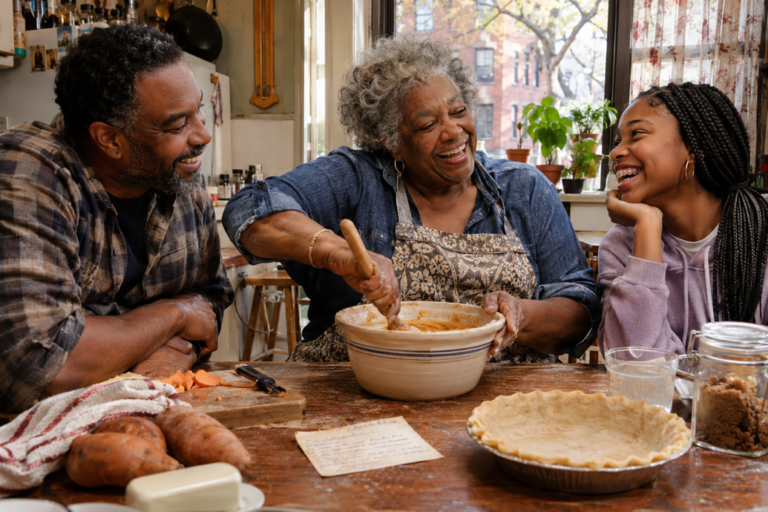
A Little of This, A Lot of Love: The Stories Behind Our Family Recipes
Ask someone for a family recipe, and you might get exact measurements.
Or you might hear, “Just add a little until it looks right.”
Which, of course, raises another question: How much is “a little”?
That’s part of the fun. A familiar dish can come with instructions, opinions, laughter, and a story that takes longer to tell than the food takes to cook. Before you know it, a conversation about dinner becomes a conversation about family.
And that is something worth making room for.
There’s a Story in the Kitchen
For many Black families, food offers a connection to the people and places that shaped them. A pot of greens, a sweet potato pie, a favorite rice dish, or a recipe that traveled from the South to Chicago can carry memories that never made it into a family album.
Who taught you to make it? Who changed the recipe? Who insists theirs is still the best?
Every family has its own answers. Some traditions involve Sunday dinner. Others live in backyard gatherings, neighborhood celebrations, or a quick meal shared with someone who always makes you feel welcome.
The value is in the details—and in the people who remember them.
Let the expert tell it
Older adults have stories worth hearing, and a favorite dish can be an easy place to begin.
Instead of asking only how something is made, try asking:
- Who first made this for you?
- Was it an everyday meal or something saved for special occasions?
- What did you enjoy eating when you were growing up?
- What have you changed to make the recipe your own?
Then give the conversation time. The recipe might lead to a story about a first apartment, a neighborhood store, or someone whose kitchen always had room for one more person.
With permission, write down the answers or record a short voice memo. Keep the little expressions, too. “You’ll know when it’s ready” deserves its place in the family cookbook.
Pass the apron—and share the work
Preserving a tradition should be enjoyable for the person sharing it.
Invite someone to demonstrate one step while others handle the chopping, shopping, or cleanup. Sit together at the table to prepare ingredients. If cooking is too much, look through old recipe cards or talk over a favorite takeout meal.
And leave room for something new. Ask a younger family member to bring a dish they love. Let them explain it. A good food conversation can travel in both directions.
Make room for another story
At Sage Collective®, vibrant living includes opportunities to connect, create, learn, and contribute. Sharing a recipe offers a simple way to do all four.
This month, choose one dish and ask about the person behind it. Invite a relative, friend, or neighbor into the conversation.
You may finally learn what “a little” means.
And you’ll have a good reason to stay at the table a little longer.