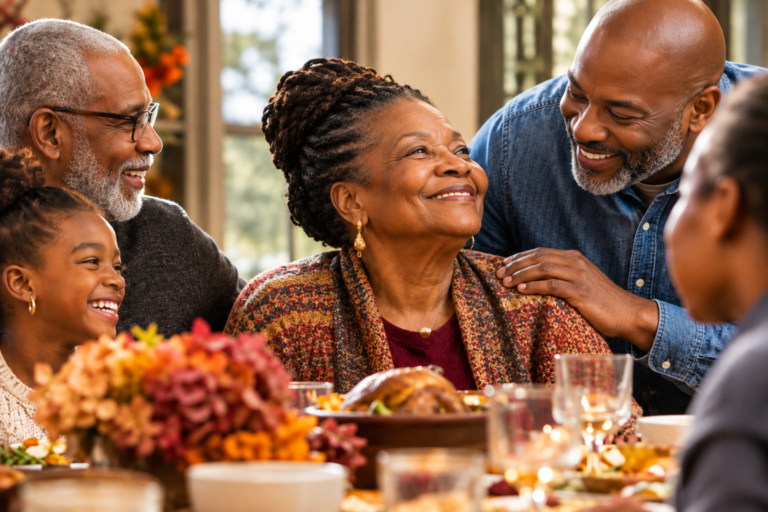
Making Room for Care During the Holidays
The holidays arrive with a familiar collection of expectations. Families gather. Meals are prepared. Decorations come out of storage. Traditions return. We imagine tables filled with people we love, familiar recipes, favorite music, laughter, conversation, and the comfort of doing things the way we have always done them.
But for families navigating caregiving, the holidays can look and feel quite different, often making their responsibilities more complicated.
A daughter caring for a parent with dementia may wonder whether a large family gathering will be too overwhelming. A husband caring for his wife may find that preparing the holiday meal has become more than he can manage. An adult child traveling home for Thanksgiving may discover that a parent’s health has changed more than anyone realized. And the person who has always organized the celebrations may now be the one who needs assistance.
At Sage Collective®, we believe vibrant living includes the ability to adapt to life’s changing circumstances while preserving the relationships, experiences, and traditions that give our lives meaning. During the holidays, that may mean letting go of certain expectations so that something equally meaningful can take their place.
When Holiday Expectations Meet Caregiving Realities
The scale of family caregiving in America is substantial. According to a 2025 AARP and National Alliance for Caregiving report, approximately 63 million American adults provide ongoing care to a family member, friend, or loved one with a medical condition or disability. That is nearly one in four adults.
For many, caregiving is already a demanding combination of physical assistance, medical coordination, household management, emotional support, and financial responsibility. The holidays introduce yet another layer.
There are gifts to purchase, meals to prepare, visitors to accommodate, religious services to attend, and family traditions to maintain. For someone whose daily life is already organized around another person’s needs, even enjoyable activities can become additional obligations.
The emotional demands can be just as significant. Caregivers may feel pressure to make the holidays special for everyone else while privately experiencing fatigue, frustration, worry, or grief. And because the season is so closely associated with happiness and togetherness, those feelings can be particularly difficult to acknowledge.
One of the most helpful things families can do is recognize that the holidays don’t have to look exactly as they once did to remain meaningful.
The Traditions We Keep, and the Ones We Change
Holiday traditions often carry extraordinary emotional weight, especially in families where they have been passed from one generation to the next.
In many African American families, the holidays are deeply connected to cultural memory. Recipes learned from mothers and grandmothers. Music that has filled the house for decades. Church services, family gatherings, storytelling, and rituals that connect younger generations to those who came before them. offer continuity with traditions that remind us who we are and where we come from.
But traditions can also create expectations that become difficult to fulfill when health circumstances change. Perhaps the grandmother who always prepared Thanksgiving dinner can no longer spend hours in the kitchen. Perhaps a loved one with mobility limitations cannot comfortably travel to the family gathering. Perhaps someone living with dementia becomes anxious in a crowded room filled with unfamiliar activity.
The question becomes how to preserve the meaning of a tradition while allowing its form to change. A cherished family recipe might be prepared by grandchildren, with their grandmother offering instructions from a comfortable chair. A large holiday dinner might become a smaller afternoon gathering. A family member who cannot attend church in person might participate in a streamed service or enjoy a visit afterward.
Making Space for the Person Receiving Care
Holiday celebrations can be stimulating, exhausting, and sometimes confusing for older adults managing health conditions, mobility challenges, or cognitive changes. Family members may arrive with the best intentions, eager to include everyone in every activity. But what feels festive to one person may feel overwhelming to another.
For someone living with dementia, multiple conversations, loud music, unfamiliar faces, and changes in routine can create distress. Someone managing chronic illness may need more frequent rest, a particular meal schedule, or a quieter environment.
This is where thoughtful planning can make an enormous difference. A gathering might include a comfortable room where someone can rest. Family activities might be scheduled around the time of day when a loved one feels most alert. A celebration might be shortened, or visits spread across several days rather than concentrated into one long afternoon.
Just as important is remembering that older adults should have a voice in how they participate. Someone who can no longer prepare an entire holiday meal may still enjoy setting the table, folding napkins, selecting music, or sharing the story behind a family recipe. This helps preserve their sense of belonging, participation, and dignity.
When Families Gather, Caregiving Becomes Visible
One of the unusual things about the holidays is that they bring together family members who may have very different understandings of a loved one’s daily needs. The person providing care every day knows the medication schedule, the changes in mobility, the appointments, the difficult mornings, and the small adjustments that make daily life possible. Relatives who live farther away may see only occasional glimpses of that reality. Holiday visits can therefore become moments of revelation.
An adult child may recognize that a parent needs more support than previously understood. Siblings may discover how much responsibility one family member has assumed. Someone who has been quietly managing everything may finally have an opportunity to explain what daily caregiving actually involves.
These conversations are not always easy. Families have their own histories, patterns, and expectations. Responsibilities may be unevenly distributed, and caregivers may hesitate to ask for help. But the holidays can also create an opportunity to move from concern to cooperation. Instead of asking a caregiver to continue managing everything, relatives can begin discussing what each person might realistically contribute. One family member might handle transportation to medical appointments. Another might manage prescription refills. Someone living farther away could help organize finances, research services, or coordinate appointments.
The Gift of Practical Support
During the holidays, we often express love through gifts. But for someone providing daily care, the most meaningful gift may have little to do with something wrapped in paper. It might be an afternoon without responsibilities. A family member who takes over caregiving duties for several hours can give someone the opportunity to attend a holiday gathering, visit a friend, run errands, or simply rest. A prepared meal can eliminate another task from an already crowded day. Help with grocery shopping, cleaning, transportation, or household repairs can make an immediate difference. And sometimes, the most valuable support is simply spending time with the person receiving care so the caregiver can enjoy a moment of freedom.
Rather than saying, Let me know if you need anything, we might ask, Can I stay with Mom on Saturday afternoon so you can have some time to yourself? Support is most useful when it reduces the work of caregiving rather than adding to the work of organizing it.
Making Room for Mixed Emotions
For caregivers, the holidays can bring feelings that don’t always fit neatly into the season’s expectations. There may be gratitude for the opportunity to spend another holiday together, alongside sadness about changes in a loved one’s health. There may be joy in familiar traditions, alongside exhaustion from the effort required to maintain them. There may even be grief for the way things used to be while the people involved are still very much present.
A caregiver may miss the mother who once hosted every gathering, even while sitting beside her at the table. A spouse may feel the absence of familiar conversation or shared responsibilities. An adult child may find that returning to the family home brings both comfort and a painful awareness of change. It is possible to love someone deeply and feel overwhelmed by their care. To treasure a holiday gathering and wish it were less demanding. To be grateful for family and disappointed by how little assistance some relatives provide. Recognizing these complicated feelings is part of making the holidays more humane.
Caregivers need opportunities to speak honestly, maintain friendships, seek support, and experience moments that belong to them as individuals, not only as people responsible for someone else. The holidays should make room for their humanity, too.
The Possibility of Smaller Joys
When circumstances change, we sometimes become so focused on what can no longer happen that we overlook what remains possible. A family may not be able to host its traditional holiday celebration, but perhaps everyone can gather for dessert. A loved one may no longer be able to travel, but family members can bring the celebration to them.
Someone living with dementia may not remember the details of a holiday gathering, but may still respond to familiar music, a favorite food, or the warmth of a loved one’s presence. A caregiver who cannot participate in every event might find genuine pleasure in a quiet evening, a favorite holiday film, or a conversation with an old friend. These moments may be smaller than the celebrations we once imagined, but their meaning is not necessarily diminished. In fact, caregiving can sometimes sharpen our awareness of what matters most.
A Season of Shared Care
The holidays offer a timely reminder that caregiving is not simply an individual responsibility. It is a family and community experience, one that can be strengthened when more people participate. For older African Americans, traditions of mutual care have long been woven into family life, faith communities, friendships, and neighborhood relationships. Those networks can become especially meaningful during a season when expectations are high and the need for support may be greater. A church member who delivers a holiday meal. A neighbor who offers a ride. A friend who checks in on someone who cannot attend a gathering. A grandchild who spends an afternoon listening to family stories. These acts may seem ordinary, but they help create a holiday season in which care is shared rather than carried by one person alone.
Perhaps this is a useful way to think about the holidays when caregiving is part of the picture. Not as a season in which everything must be perfect, or every tradition must remain unchanged, but as an opportunity to reconsider what togetherness really means. And to discover that even when the holidays look different from the ones we remember, there can still be an abundance of meaning, connection, and joy.